The Double Herringbone and interlacing
This motif is merely a build up of the Basic Single diamond.
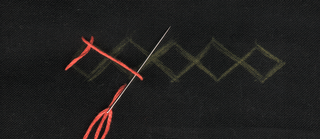
This motif has as its foundation, the Double Herringbone Stitch - the working of which is illustrated in the picture. Just be sure to follow the same principles of overs and unders we established in the previous lessons.
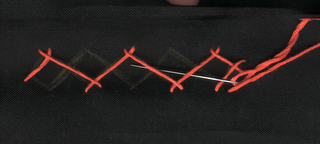
This illustration shows how to turn once the end of the motif is reached. Notice that the second part of the Double Herringbone is worked from left to right as a continuation of the first part.

The Foundation of Double Herringbone completed.
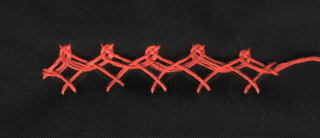
Now The upper part is interlaced first
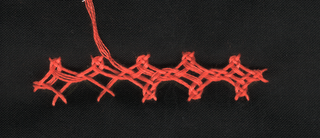
When you reach the end, turn and start interlacing the lower half.
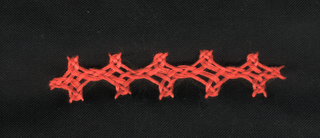
The completed motif.
If you have understood these lessons, you can create elaborate designs using these basic motifs. All you need is a graph notebook and some imagination. The possibilities are limitless. Have fun.
I'll come back to you on this topic as and when I come across different motifs.
This motif is merely a build up of the Basic Single diamond.
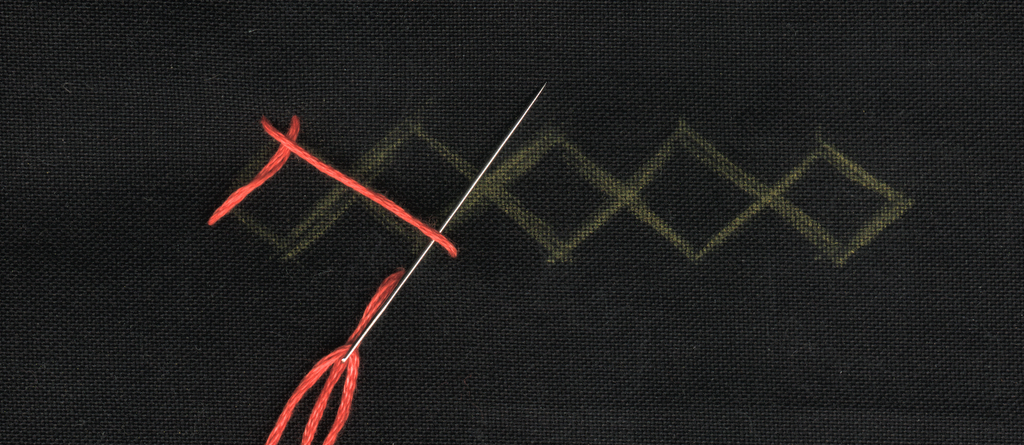
This motif has as its foundation, the Double Herringbone Stitch - the working of which is illustrated in the picture. Just be sure to follow the same principles of overs and unders we established in the previous lessons.
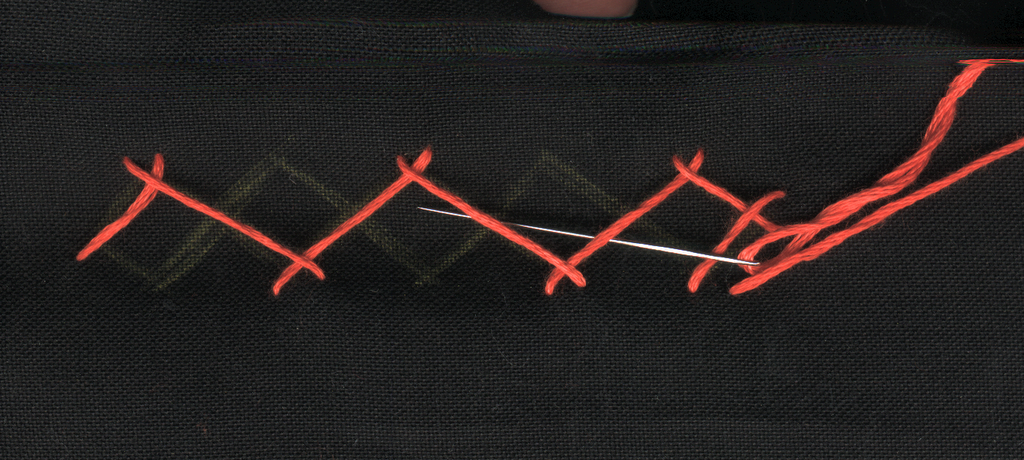
This illustration shows how to turn once the end of the motif is reached. Notice that the second part of the Double Herringbone is worked from left to right as a continuation of the first part.
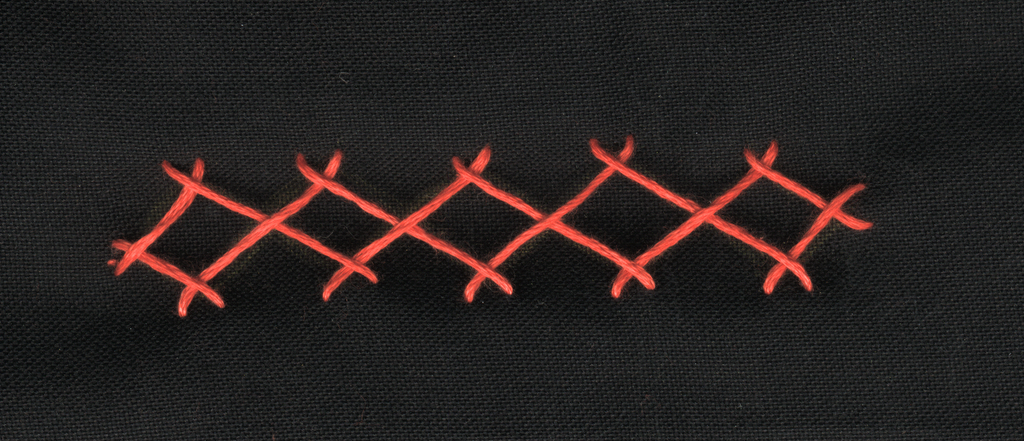
The Foundation of Double Herringbone completed.
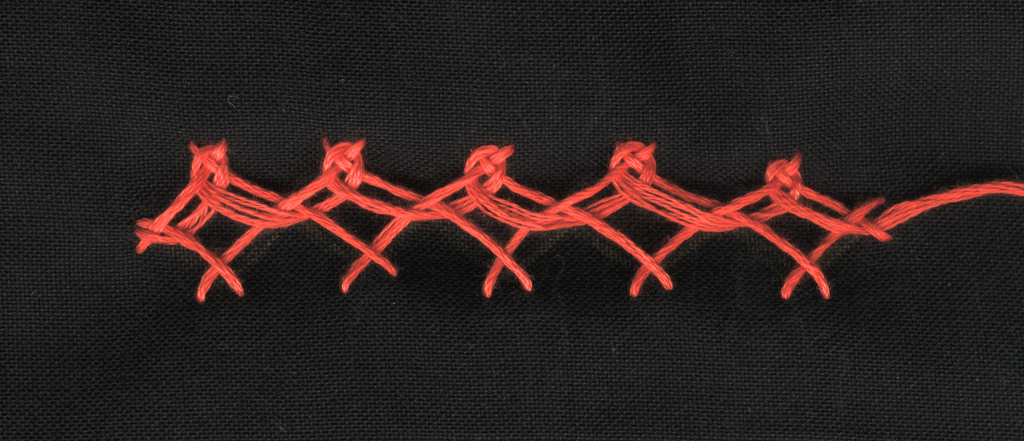
Now The upper part is interlaced first
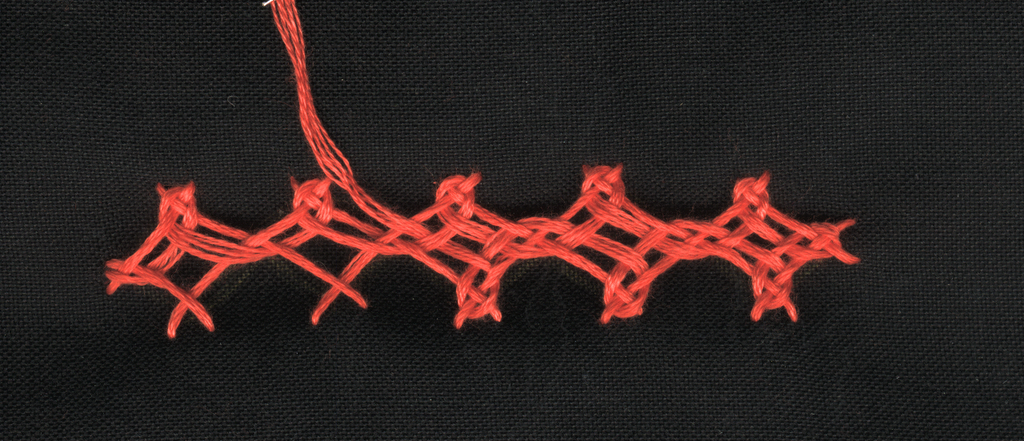
When you reach the end, turn and start interlacing the lower half.

The completed motif.
If you have understood these lessons, you can create elaborate designs using these basic motifs. All you need is a graph notebook and some imagination. The possibilities are limitless. Have fun.
I'll come back to you on this topic as and when I come across different motifs.

17 comments:
I want some kutchwork designs.
my email id is science4u@gawab.com
Most craft stores in Chennai and Bangalore have Kutchwork design books. You can buy books from there.
Hai bhavani,
thanks for your kutch work tutorial.
chanti
This is such a wonderful blog Bhavani. Thanks for sharing your talent with us.
Bets wishes,
Mamatha
hi! I m from India too and came across your site from 25motif challenge page. I am really so excited I found your blog. absolutely love it!! btw, isn't kutch work the same as Sindhi taaka? I learnt embroidery (most of it) when I was in college and I was taught it as sindhi taaka. Anyway, thanks for the tutorial... I am definitely your student.
Hi mam,
It is simply by chance that I happened to come across your blog and I dont know if I would manage to trace your site again. but thank you so much for your valuable input on kutchi work - i had done an entire table cloth with this pattern but had all but forgotten it - thanks to u i managed to recollect what i had done in my school days. thanks -
please provide me with more kutch work design
Hi Bhavani,
I learnt Kutch work from a friend of mine long ago but I completely forgot how to do it though I tried many times. It was a pleasant surprise to get your step by step instructions on kutch work. thankyou for the effort you have put in. I sure will make a piece or two of this work
Vijaya
Hi Bhavani
Thanks for the effort you have put in. The step by step instructions are very helpful.
Smitha
How many squares big is it on a graph paper?
4X4 should be ideal
Thank you
Hi Bhavani,
Excellent tutorial. By chance i came across your tutorial as I am interested in any craft or needle work. You have taken so much of effort to teach. Enjoyed going through all kutch work lessons. I was amazed by your efforts.
Regards
Mnjukps
Thank you Manju
This is a wonderful tutorial. Although Kutchwork seems very complicated, it's in fact so easy. I'd love to try it.
Thank you very much for making and sharing this tutorial.
Great job Bhavani Harikrishnan... Thank you very much for this great Double Herring Bone in Sindi embroidery digitizing. Keep it up.
Post a Comment